Preserve more of your natural tooth. Explore a smarter approach to early cavity care.
Could an early cavity be treated without a traditional filling?
In some cases, yes. Advances in minimally invasive dentistry are giving patients new ways to address early tooth decay while preserving more of their natural tooth structure. One option is Curodont® Repair Fluoride Plus, an in-office treatment designed to help manage early-stage cavities without drilling or injections.
At Jennifer Chiang DDS, we believe thoughtful dental care begins with early detection, individualized treatment, and a commitment to preserving natural tooth structure whenever possible.
What Is Curodont?
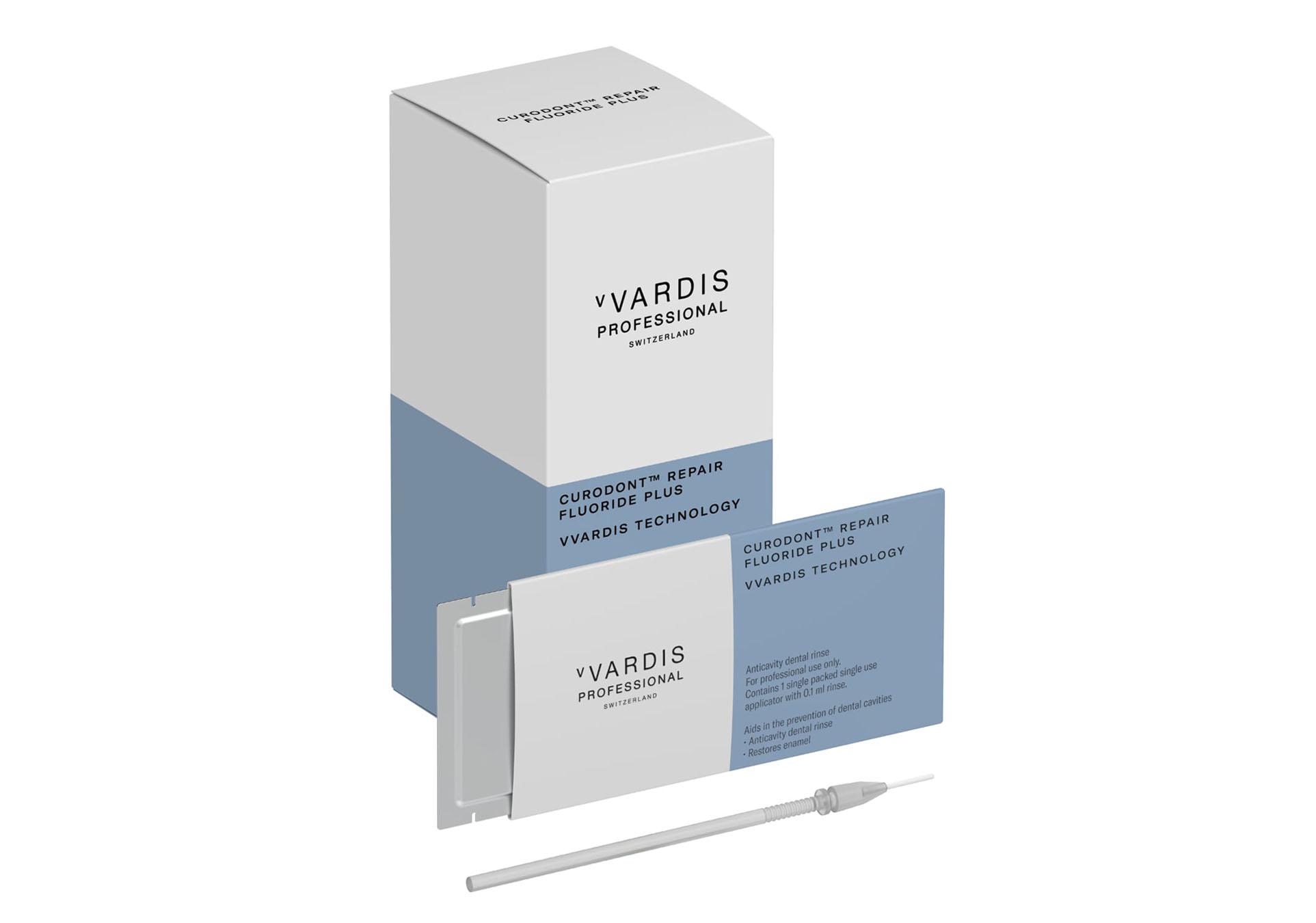
Curodont Repair Fluoride Plus, developed by vVARDIS, is a non-invasive treatment designed for certain early cavities and enamel lesions, including some white spot lesions. Unlike a traditional filling, which requires removing damaged tooth structure and placing a restorative material, Curodont works by supporting mineral restoration within an early lesion.
The treatment uses a specialized formulation containing fluoride and a peptide-based component. It helps fluoride, calcium, and phosphate participate in forming hydroxyapatite—the mineral that gives teeth their strength. The goal is to restore mineral density within weakened enamel and help prevent an early lesion from progressing.
For appropriately selected cases, this treatment offers an additional option between preventive care alone and conventional restorative treatment.
How Does Curodont Work?
To understand the treatment, it helps to know how cavities begin.
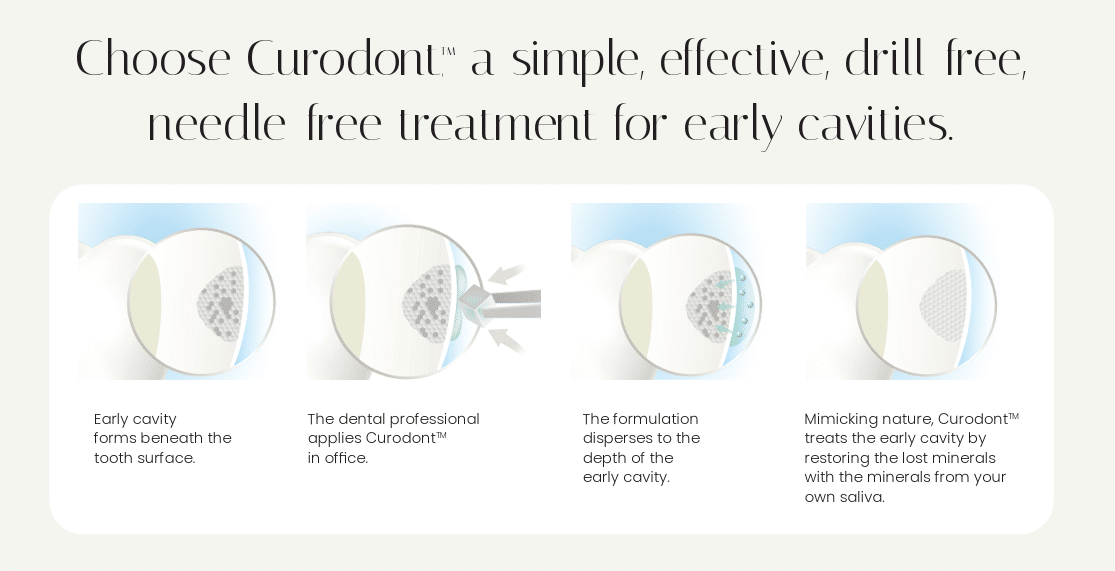
Teeth continually lose and regain minerals. When oral bacteria produce acids from fermentable carbohydrates, minerals can leave the enamel. Saliva and fluoride help replenish those minerals, but sometimes the process falls out of balance.
Early damage may appear as a chalky white spot or as a small area of decay visible on a dental X-ray. At this stage, the tooth surface may still be intact, meaning a traditional filling may not yet be necessary.
Curodont Repair Fluoride Plus is applied directly to a professionally prepared tooth surface. Its formulation helps support mineral formation within the early lesion over time. The procedure is designed to be completed during an office visit, often without drilling, needles, or traditional filling materials.
Importantly, this is not the same as filling an established hole in a tooth. Once a cavity has progressed to substantial structural breakdown, a filling or another restorative procedure may still be necessary.
Who May Benefit From Curodont?
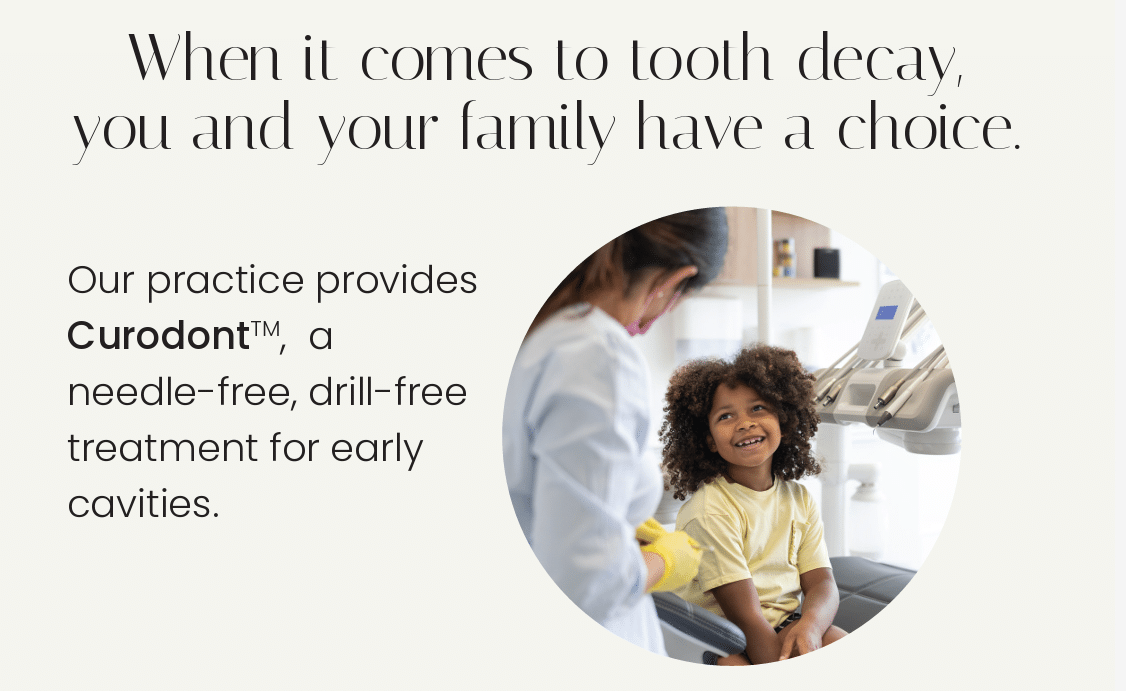
Curodont may be considered for children, teenagers, and adults with suitable early-stage caries. Potential candidates include:
- Children with early enamel lesions: Early evaluation at Sunnyvale Family Functional Dental Office can help identify opportunities to preserve developing and newly erupted teeth.
- Teens undergoing orthodontic treatment: White spots and early decay can develop around braces when plaque is difficult to remove.
- Adults with early cavities: Small lesions between teeth or on chewing surfaces may sometimes be managed without conventional drilling.
- Patients interested in minimally invasive dentistry: Preserving healthy tooth structure can help reduce the need for more extensive restorative work when early lesions are successfully managed.
Although the manufacturer describes the product as suitable for all ages, candidacy depends on the individual tooth, lesion depth, clinical findings, and the patient’s overall cavity risk. Treatment is not appropriate for every cavity.
At our office, we evaluate each patient’s needs individually and explain the available treatment options before recommending an approach.
What Does the Research Say?
Clinical research on Curodont’s peptide-based approach is promising. A 2023 systematic review and meta-analysis published in the Journal of the American Dental Association evaluated six clinical trials of self-assembling peptide P11-4 products. The authors found evidence that Curodont Repair may improve caries arrest and reduce early lesion size compared with control approaches. However, they also noted limitations in the available studies and called for longer-term research.
More recent research has examined Curodont Repair Fluoride Plus specifically. A 2024 randomized controlled clinical trial compared the fluoride-containing peptide treatment with fluoride varnish for early carious lesions. A 2025 randomized controlled clinical trial also investigated treatment of white spot lesions in primary teeth.
These findings support continued interest in minimally invasive caries management, but results vary by study, product formulation, and lesion characteristics. Laboratory findings do not necessarily predict an individual’s clinical outcome, and no treatment can guarantee that every early cavity will stop progressing.
At Jennifer Chiang DDS Inc, we believe patients deserve clear explanations of both the potential benefits and the limitations of emerging dental treatments.
What Happens During Treatment?
Our team begins by examining the tooth and evaluating the lesion using clinical findings and appropriate diagnostic imaging. If the lesion is suitable, the tooth surface is cleaned and prepared before the product is carefully applied.
The application itself is brief; the manufacturer describes a protocol that can take as little as three minutes. Our team will provide personalized aftercare instructions and determine an appropriate monitoring schedule.
Because mineral changes may not be immediately visible on an X-ray, follow-up assessment is important. During subsequent visits, our team will monitor the lesion and determine whether it remains stable or additional treatment is needed.
A More Conservative Approach to Your Smile
Curodont is one example of how modern dentistry is expanding the options available for early cavities. It does not replace regular dental examinations, professional cleanings, fluoride when appropriate, good home care, or a personalized approach to reducing cavity risk.
At Jennifer Chiang DDS in Sunnyvale, California, we care for patients from 6 months old through 100 years of age, tailoring recommendations to each person’s age, oral health, and individual needs. Our approach combines personalized care, preventive strategies, and minimally invasive treatment options whenever clinically appropriate.
Our goal is to identify problems early, explain treatment options clearly, and preserve healthy tooth structure whenever possible.
Wondering whether an early cavity can be treated without drilling? Contact us to schedule an evaluation and explore whether Curodont or another minimally invasive treatment may be appropriate for your smile.
This article is for educational purposes and is not a substitute for an individualized dental examination or diagnosis.
References
- Alkilzy et al. (2023). Systematic review and meta-analysis on the effect of self-assembling peptide P11-4 on arrest, cavitation, and progression of initial caries lesions. Journal of the American Dental Association, 154(7), 580–591.e11. Read on PubMed
- Shaalan O, Fawzy El-Sayed K, Abouauf E. (2024). Evaluation of the remineralization potential of self-assembling peptide P11-4 with fluoride compared to fluoride varnish in the management of incipient carious lesions: a randomized controlled clinical trial. Clinical Oral Investigations, 28, 438. Read on PubMed
- Khairy SM, Talaat DM, Dowidar KML. (2025). Remineralization of white spot lesions in primary teeth using an intensive application protocol of Curodont Repair Fluoride Plus, MI Varnish or Duraphat Varnish. Journal of Evidence-Based Dental Practice, 25(3), 102163. Read on PubMed
- vVARDIS. Curodont Repair Fluoride Plus: Product information and clinical cases.
- vVARDIS. Professional scientific literature library.
